


Archive for the Bennett Traub Category
New Zealand’s Central Otago-Pinot Noir In-Depth: Introduction
 October 5th, 2010 |
  Author:
 Links to Article Sections:
- New Zealand’s Central Otago-Pinot Noir In-Depth: Introduction
- Overview and Vertical Tasting
- Touring Central Otago’s Subregions
- Conclusion
“Want the inside track on Central Otago Pinot Noir? Look no further. You are cordially invited to attend an E’sensual Pinot Adventure in Central Otago, 29th July to 1st August 2010.”
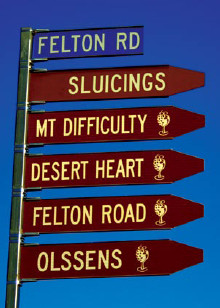
Click to enlarge - photo courtesy of Central Otago Winegrowers Association. Please visit their content rich site at http://www.cowa.org.nz/
I have a strong appreciation for the wines of New Zealand, and in particular that nation’s Pinot Noirs. That appreciation was sparked in large part when I attended Pinot 2007, the triennial exploration and celebration of New Zealand Pinot, an event which I reported on at length here on the Gang of Pour. Since then, I’ve made it a point to sample New Zealand Pinots whenever I can, and I continue to be impressed with the quality and sheer enjoyment these wines provide. But more than that, New Zealand pinots are really beginning to define a unique style for this most expressive grape—not quite Burgundian, not really Californian or Oregonian in style, either, but a unique style that is only beginning to be defined and which continues to evolve. And like both France and the U.S., the various places in New Zealand where Pinot grows are each beginning to develop their own unique characteristics, distinct from one another, reflecting the varied terroir that defines each region, and New Zealand as a whole.
So when the invitation above arrived in my email, I couldn’t wait to go. For this was an opportunity to explore in depth the region that has become the most important source of quality New Zealand Pinot Noir—Central Otago. There are excellent Pinot grown elsewhere in New Zealand—Martinborough, Waipara, and Marlborough to name the most well-known—but Central Otago has quickly established itself as the leading region for New Zealand Pinot Noir. And as the region has grown in stature, it is beginning to define itself not just by its regional identity within New Zealand, but by the various subregions that exist there as well.
 Posted in
New Zealand’s Central Otago-Pinot Noir In-Depth-Overview and Vertical Tasting
Links to Article Sections:
- New Zealand’s Central Otago-Pinot Noir In-Depth: Introduction
- Overview and Vertical Tasting
- Touring Central Otago’s Subregions
- Conclusion
E’ Sensual Pinot formally began on a chilly Thursday evening (this being Winter down under) with an initial overview of Central Otago, given by winemakers Matt Dicey (Mt. Difficulty) and Duncan Forsyth (Mount Edward), at the Mt. Difficulty tasting room. Much of the information I have related in the other sections of this article was covered, as well as a brief history of the region. It is remarkable to remember that as far as Pinot Noir is concerned, Central Otago is one of the newest winegrowing regions around. The first Pinot bottled here was a 1987 made by Alan Brady of Mount Edward, with Rippon following shortly thereafter. The real growth in Pinot Noir plantings in the area didn’t begin until the mid-to-late 1990’s. Thus all of the wines in the vertical tasting that followed were made from exceptionally young vines, as well as by winemakers who were just beginning to understand the unique climate and terroir of Central Otago.
At the opening meeting, the following wines from three older vintages were served. All of the wines came from the Bannockburn region, except where noted.
Touring New Zealand’s Central Otago Subregions
Links to Article Sections:
- New Zealand’s Central Otago-Pinot Noir In-Depth: Introduction
- Overview and Vertical Tasting
- Touring Central Otago’s Subregions
- Conclusion
The following morning, our tour of Central Otago’s subregions began in earnest. The format for visiting the various regions involved a bus ride to the tasting room of one of the regions more prominent wineries, with a winemaker with experience in the region offering commentary about the region, the wines, and the characteristics that make each respective region unique. There would then be a tasting of several (usually 4-6) examples of “typical” Pinot Noirs from the region (not blind) from the 2007 vintage, followed by a lunch or dinner, at which more wines from the region would be served (usually a half dozen or so), both Pinot Noir and some of the regions white wines (usually dry Riesling and Pinot Gris). I took careful notes on the wines in the tasting portion, but did not take notes on the luncheon or dinner wines, as these were mainly social occasions, with a good opportunity to talk wine with the local winemakers and other participants in the program.
Conclusion: New Zealand’s Central Otago-Pinot Noir In-Depth
Links to Article Sections:
- New Zealand’s Central Otago-Pinot Noir In-Depth: Introduction
- Overview and Vertical Tasting
- Touring Central Otago’s Subregions
- Conclusion

Click to enlarge - Image courtesy of centralotagopinot.co.nz/gallery.html. Please visit their gallery for more fantastic photos!
For most Americans, only recently cognizant of New Zealand as a producer of quality Pinot Noir at all, the idea of focusing on sub-regions within a single producing region of New Zealand may seem a bit, well, premature, if not presumptuous. Focusing on ever-smaller and more detailed subregions in the United States is a fairly recent phenomenon, and one that the general public is only just beginning to understand. While most Americans understand “Napa Valley” or “Sonoma Valley”, it takes a pretty knowledgeable wine-lover to even recognize the existence of “Howell Mountain” or “Russian River Valley”, much less to understand (or care about) the differences in the wines from those subregions. As for New Zealand, how many people know that there are a good half-dozen regions making quality Pinot Noir there, of which Central Otago is only one? Does identifying and marketing wines from one of New Zealand’s regions, Central Otago—by focusing on smaller subregions within it—make sense today?
Ridge’s Jimsomare—The “Other” Monte Bello
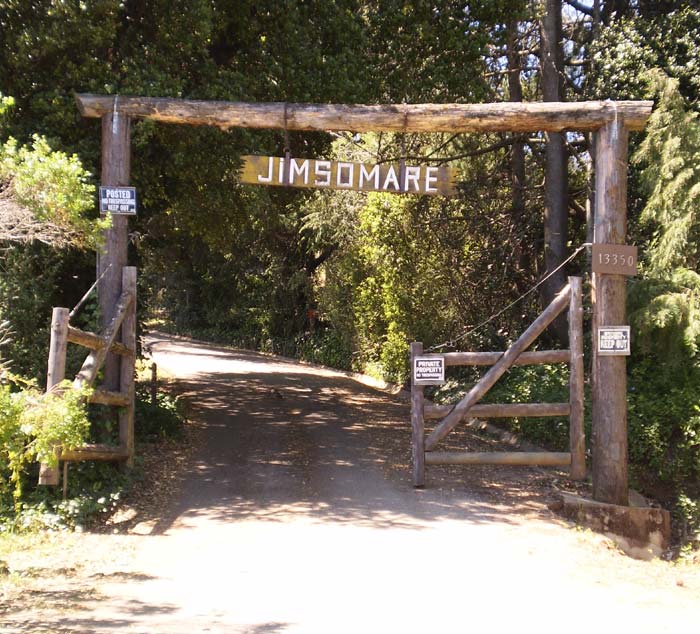
Jimsomare's Gate - Click to enlarge
Last week I had the rare opportunity to attend a tasting of two verticals from Ridge’s famed, but elusive, Jimsomare Vineyard. One of three Ridge vineyards on Monte Bello ridge, Jimsomare has been the source of outstanding Zinfandel and Cabernet Sauvignon from Ridge’s beginning. It also has Ridge’s plantings of Chardonnay. Ridge, of course, is so well known to Gang-ites (or is it Gangsters?) that I’m not going to waste precious e-space going into the long and storied history of Ridge. And although Ridge’s Jimsomare Vineyard may be less well-known than some others, since it gets only limited distribution from the winery, and occasionally in Ridge’s now-defunct Cabernet Program and still-thriving ATP, it is well-known and loved by the Gang. In fact, Allan Bree reported on a similar Jimsomare tasting way back when in 1999. So let’s get to it! Read the rest of this entry »
Book Review: “The Wild Vine” and the story of Norton
 Diversity, as an element in wine appreciation, is one of those “good for you” concepts that almost everyone embraces, but few of us practice. Despite the existence of literally hundreds of different wine varieties in the main wine-grape genus of vitis vinifera, most wine drinkers limit themselves to drinking the same dozen or so varieties—cabernet, pinot noir, syrah, chardonnay, riesling, etc. Even the most adventurous of wine drinkers probably consumes no more than 2 or 3 dozen different varieties on a regular basis. And as for wine grapes that are outside the universe of vitis vinifera, well, those grapes might as well not exist at all. But are we missing something important by limiting ourselves so severely? In failing to appreciate (or even sample) the breadth of expressions available from wines off the beaten track, do we deprive ourselves not only of something pleasing, but also of something important in our cultural heritage?
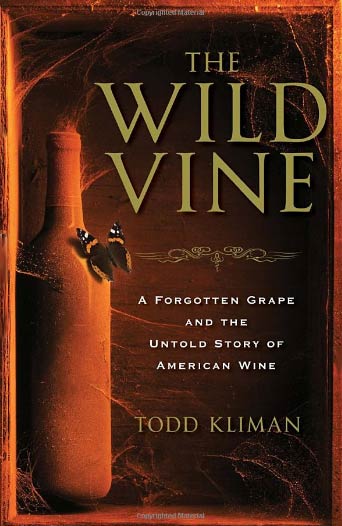
These thoughts kept going through my mind as I read The Wild Vine: A Forgotten Grape and the Untold Story of American Wine
Hospice du Rhone 2010 Friday Seminars – S. African Syrahs and Cote Rotie
Both Friday seminars are presented in this post:
“We’ve Come a Long Way Baby!
The Past, Present and Future of South African Syrah”

2010 Rhonely Hearts Club
One of the best things about Hospice du Rhone is the world-wide focus of the event. Sure, domestic wines are front and center, especially from the Central Coast, but HdR has always celebrated the WORLD of Rhone varietals, both here, their home in France, and in all of the wine-producing countries in the world. So it was appropriate that HdR 2010’s seminar lineup kicked off with an in-depth look at South Africa, one of the oldest wine-growing regions, and yet one of the newest, too, particularly as a producer of high quality Rhone varietals and blends. Read the rest of this entry »
Exploring the Beaucastel/Tablas Creek Connection
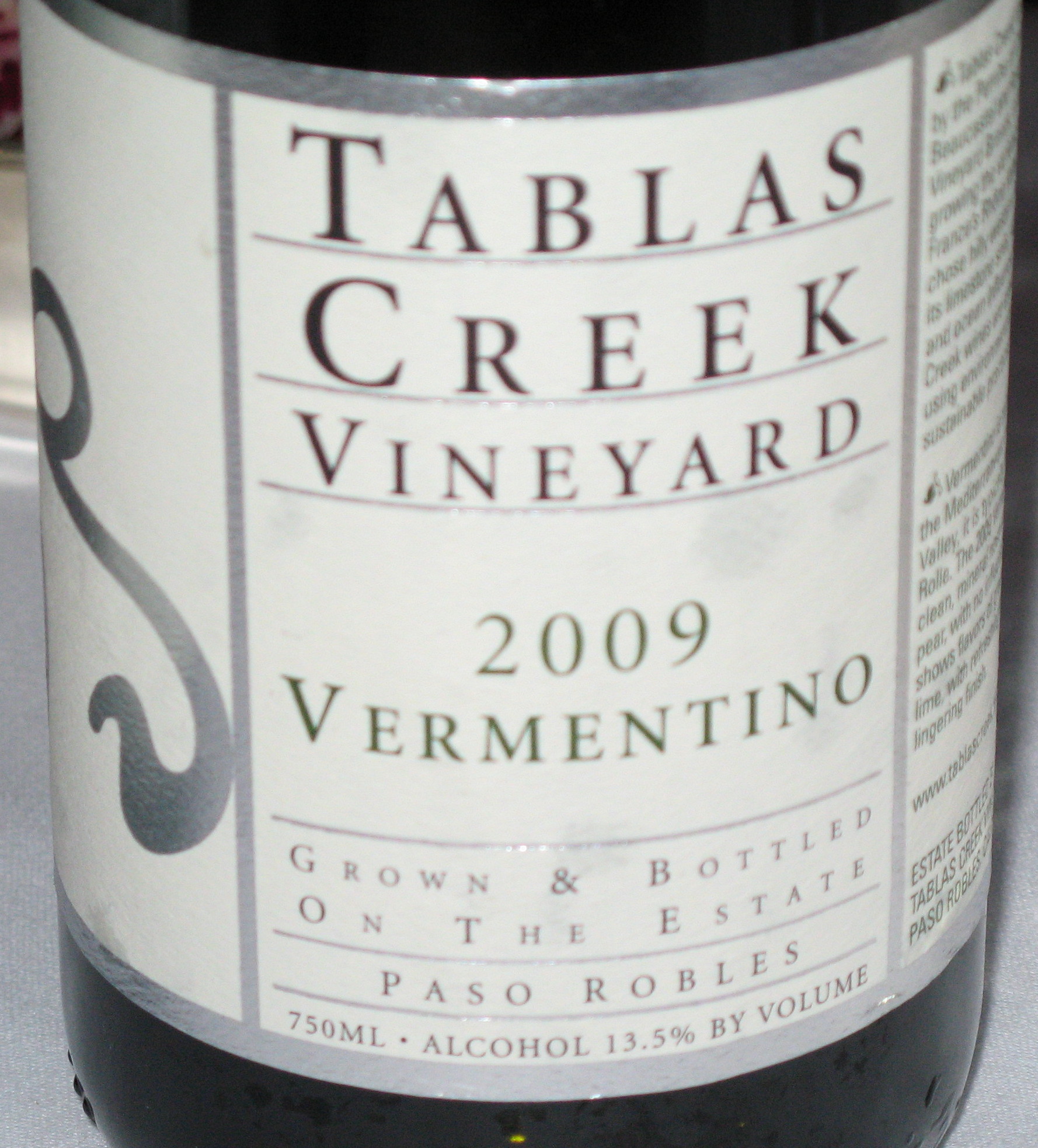 This month’s dinner/tasting with my regular group, the X-pensive Winos, gave us the opportunity to compare wines from two very different, but related estates, Chateau de Beaucastel and Tablas Creek. Of course, everyone knows that Tablas Creek is a partnership created by Beaucastel and its importer, Robert Haas. The estate was created with the declared intent to create a wine with the heritage and quality of the great Chateauneuf du Pape, but reflective of its American terroir. Most of us had tasted numerous examples of both estates, and at least Beaucastel is very highly regarded by most of us in the group. But I know that I had not really been all that impressed by Tablas Creek, which seemed like a very well-run winery with big ambitions, but whose wines, while quite good, had never seemed particularly distinctive, except that they are clearly different from a lot of other Rhone-style wines in Paso Robles. With all the big, ripe mo-fo’s out there in Paso, Tablas Creek just seemed a bit underwhelming. But maybe that’s the point? Tablas Creek is clearly not making the “typical” Paso Robles red, so this tasting gave us the chance to see if Beaucastel’s genes had really found their way into their Paso offspring. Read the rest of this entry »
Palmina—California’s Italian Variety Specialist

click to enlarge
Wines based on Italian grape varieties have had a rough go of it here in California. What was supposed to be the next great thing in California wine is, today, a sideshow at best, and a rapidly dwindling one at that, as producer after producer quietly drops their Italian varietal wines in favor of more widely accepted (and profitable) varieties like Pinot Noir. And yet, just when it seemed Italian varietals had no future in California, a producer that makes nothing but Italian varietal wines (and blends made from Italian varieties) has emerged that finally makes a case for them. The winery is Palmina, and it has rapidly become California’s finest producer of wines from indigenous Italian grape varieties. Read the rest of this entry »
A wine that says “Drink Me” in more ways than one
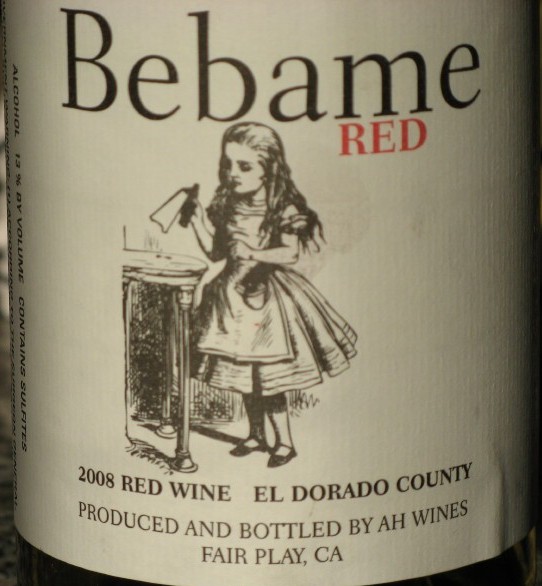
click to enlarge
I’ll admit it–I like to DRINK wine. That’s not an earth shattering admission on a wine blog, I suppose, but notice the use of the word “drink”. Not “sip”, not “taste”, not “sample” or “experience”. No, I like to really drink the stuff, preferably with food, but always in quantity, with abandon. I was thinking about that the other day after reading yet another post on a wine board about a “tasting” dinner, at which 10 or 20 different wines (always of the high-end, rare “mailing list” variety) were sampled by a bunch of guys who seemed more interested in comparing tasting notes (and awarding points) than actually drinking and enjoying the stuff. Now I’ve attended a fair share of such dinners myself (and even reported on a couple for the Gang), and they can be both fun and useful. And of course a goodly amount of wine gets consumed at such events. But what’s really more satisfying to me is to open a terrific bottle at home and enjoy the whole damn thing over the course of an evening–a glass while preparing dinner, several glasses with the meal, then polishing the bottle off afterwards with that sense of satisfaction and well-being that only a good meal and (plenty of) good wine shared with my wife can provide.
